


In the past decade there has been increasing evidence that it is the bioactive factors secreted from the transplanted cells that matter more during the treatment than the cell transplantation alone. Stem cell-derived cellfree therapy, referred to as cell-free therapy, uses the secreted products of cells to stimulate the regulation of many biological processes, including leading endogenous and progenitor cells to sites of injury, mediating apoptosis, proliferation, migration, and angiogenesis. Unlike conventional stem cell-based therapies, cell-free therapies in regenerative medicine provide significant benefits, including reduced immune rejection, tumorigenicity, and pathogen transmission. This kind of therapy is now considered the next-generation of therapeutic technology. Cell-free therapies overcome the limitations and risks posed by the cell-based therapies. (References: Sreenivas, A., & Jha, D. K. (2025). Cell-free therapies: Revolutionizing the approach to cellular treatments. In Advances in Regenerative Medicine and Tissue Engineering. IntechOpen.)
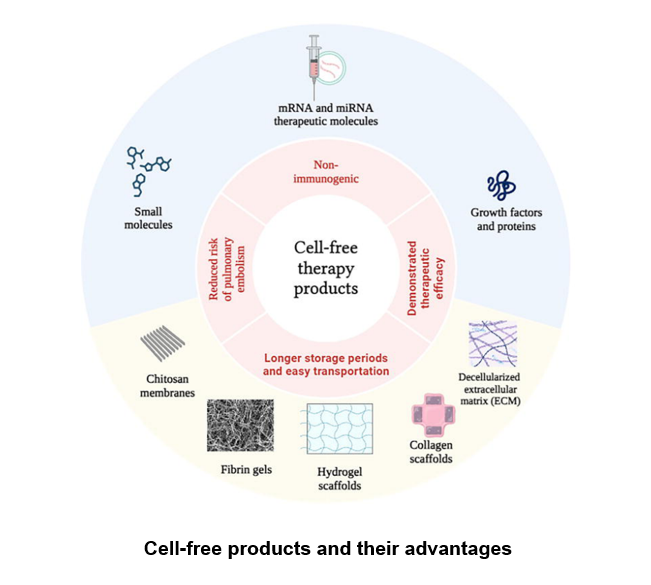
Some materials often used in cell-free therapies are secretomes and extracellular vesicles (EVs).There is a previous review by that discussed the advantages and biological activity of mesenchymal stem cell secretomes on the skin for applications such as wound healing, photoprotection, promotion of hair growth, psoriasis treatment, and other antimicrobial applications.Other studies have also proven that cell-free therapy can be used as a skinaging therapy. (References: Chou, Y., Alfarafisa, N. M., Ikezawa, M., & Khairani, A. F. (2023). Progress in the development of stem cell-derived cell-free therapies for skin aging. Clinical, Cosmetic and Investigational Dermatology, 3383-3406.)
 MakeWebEasy